
Biochar MRV Software: From Farm to Field to Your Website
Biochar is one of the most promising carbon removal routes, but proving it is a supply-chain problem. Feedstock comes from many farms, travels by truck, goes through a reactor, gets tested in a lab and ends up spread across hundreds of fields. Every stage has to be traceable, and every emission along the way has to come off the final number.
Our 60-second walkthrough shows how a fictional project, Serra Clara Biochar, runs on CitizenClimate in eleven steps, from farm to field to the project's own website.
Setting up the project
1. Create the project: name, type, farmer groups and area.
2. Invite farmers and drivers with a QR code or invite code.
3. Add the field surveys: Feedstock Preparation and Biochar Application, with photo and GPS fields.
4. Track SDG 13, Climate Action: pick the template and scoring is automatic.
5. Teach biochar basics with infographic lessons and a scored quiz.
6. Open the forum and grievances: a voice for every farmer and driver.
Following the supply chain
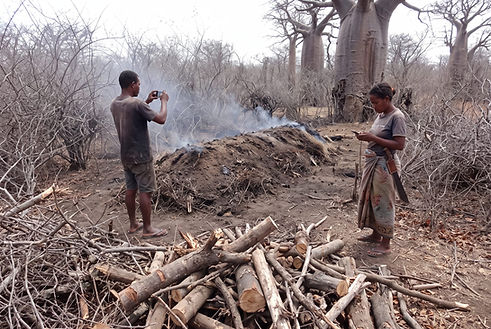
7. Farmers log feedstock: weight, moisture and GPS photos at source. In the film, Ana logs 480 kg of maize stalks.
8. Every trip is GPS-tracked: routes and distances are recorded automatically, so transport emissions are calculated rather than guessed.
9. Plant data comes in by API: reactor temperature, residence time, weighbridge figures and lab results, batch by batch.
10. Biochar goes on the fields: farmers log crop, field size, kilos applied and a GPS photo.
11. Net removal goes live on your website, credited as application records arrive.

How net removal is worked out
Gross removal is only the starting point. A credible figure subtracts the emissions from moving feedstock and biochar and from running the plant. The film's illustrative batch, B-0412, shows the logic: 9.36 t CO₂e gross, minus 0.21 t for transport and 0.27 t for production, leaves 8.88 t CO₂e net. With 3.82 t of biochar from that batch, that's roughly 2.3 t CO₂e per tonne, so a 900 kg application credits about 2.1 t.
Because every step carries GPS and a timestamp, a verifier can trace a tonne of removal back through the application, the batch and the trips to the farms the feedstock came from.
Why plant data matters: the H:Corg ratio
Stability is what makes biochar a durable removal. Puro.earth's methodology requires a molar hydrogen-to-organic-carbon ratio (H:Corg) strictly below 0.7 for each char stream, confirmed by lab analysis. The film's batch shows 0.31, produced at 612 °C with a 22-minute residence time. Pulling these figures straight from reactor and lab systems by API, rather than retyping them, removes a common source of error and gives auditors one consistent record per batch.
Who does what in a biochar project
Farmers record feedstock at source and later log every application in their fields. Drivers' phones record routes, distances and stops. The plant's systems send reactor, weighbridge and lab data automatically. The project developer sees the whole chain on one dashboard and exports reports for the verifier. Because everyone works on the same platform, there's no reconciling separate spreadsheets at the end of the season, and gaps show up while they can still be fixed.
Rewarding farmers and drivers
Surveys can carry points and a currency reward, so farmers and drivers are rewarded for each verified record. In the film, farmers earn points every time a feedstock log or application record is verified. Tying rewards to verified submissions keeps records arriving on time, which is half the battle in a distributed supply chain, and lessons on biochar basics help farmers understand why each record matters.
What CitizenClimate does, and doesn't do
CitizenClimate collects, structures and checks the evidence across the supply chain and works out a per-batch net removal estimate. It doesn't issue credits; that's the standard's job after independent verification. The data is built to align with Puro.earth and Carbon Standards International requirements, with report exports ready for your verifier.


On every screen, in 11 languages
Join the CitizenClimate movement to track and push forward monitoring progress in your community:
-
Download the app – Get started collecting data using questionnaires built for your needs
-
Access the dashboards – Use our API to visualise and compare SDG scores
-
Share your impact – Show everyone what your community's doing for sustainability
Frequently Asked Questions
What is biochar MRV?
It's the monitoring, reporting and verification of biochar carbon removal: tracing feedstock, transport, production and application, and subtracting supply-chain emissions to reach a verified net removal figure.
How are transport emissions counted for biochar?
Trips are recorded by GPS, giving a distance for each load. Those distances are combined with emission factors and subtracted from gross removal, along with production emissions.
What H:Corg ratio does Puro.earth require?
Puro.earth's biochar methodology requires a molar H:Corg ratio strictly below 0.7 for each char stream, confirmed by lab analysis, as an indicator of carbonisation and stability.
Does CitizenClimate issue biochar credits?
No. CitizenClimate provides the traceable evidence and per-batch calculations. Credits are issued by the standard, such as Puro.earth, after independent verification.
Can CitizenClimate connect to our plant's systems?
The platform is designed to take reactor, weighbridge and lab (LIMS) data by REST API, so batch records arrive without retyping. Get in touch to talk through the systems you use.